

This report was authored by Iza Camarillo, Research Director of Public Citizen’s Global Trade Watch, in collaboration with Satya Bumi, an environmental protection non-profit organization from Indonesia. All photos courtesy of Satya Bumi unless noted.
Special thanks for Rachmi Hertanti’s invaluable feedback and for the contributions of Global Trade Watch legal research fellows Dengyi Zhang and Palak Srivastava.
Nickel has rapidly emerged as a globally strategic mineral for powering batteries, defense systems, and the renewable energy transition. The race to secure these critical minerals is driving shifts in trade policy, investment patterns, and the asymmetrical dynamic between resource-rich nations and industrial powers. Indonesia sits at the heart of this scramble, as the world’s leading producer by far and home to the largest nickel reserves.[1]
Indonesia’s nickel has long attracted major foreign investors, particularly from China and the United States. For decades, the country exported raw nickel at low prices with minimal domestic processing, capturing little value for local economies and leaving its industrial base underdeveloped. The 2009 Mining Law (Law No. 4/2009) sought to reverse this pattern by requiring in-country mineral processing and strengthening state and regional control over mineral resources.[2] A brief 2014 export ban mandated by the law aimed to spur smelter development but was later eased under industry pressure.[3] Under this extractive model, Indonesia effectively sold its raw nickel abroad at bargain prices, only to import finished goods — such as stainless steel — made from its own resources at a far higher cost.[4] The ban represented an early effort to capture more value at home rather than allowing it to accrue overseas and pay the high import costs.
In 2020, the Indonesian government enacted significant reforms to its mining sector, including a full ban on raw nickel exports. The reforms aimed to promote domestic downstream processing, assert greater control over strategic mineral resources, and align with its broader industrial strategy, including the development of an electric vehicle battery industry.[5] Though challenged by multinational corporations and global powers, the policy represented a decisive effort to move beyond a purely extractive development model.[6] Since the ban, nearly all mined nickel has been processed domestically,[7] with exports shifting from low-value ore to higher-value refined and semi-finished products.[8] As a result, Indonesia’s nickel export value surged from roughly $1 billion to $20 billion within just two years.[9]
Now the fragile gains from Indonesia’s value-addition strategy are under threat.
In 2025, the Trump administration announced a new “reciprocal” trade agreement with Indonesia, part of its broader agenda to dominate critical mineral supply chains under the banner of “national security.”[10] Although the text remains undisclosed, early reporting indicates that the deal eliminates import licensing requirements, restricts Indonesia’s ability to condition foreign investment on local content or industrial policy, and grants U.S. firms sweeping market access with no binding obligations on labor rights, environmental standards, or Indigenous protections.[11] Backed by tariff threats and bilateral pressure, the U.S. appears to be using its economic power to dismantle Indonesia’s regulatory authority and gain access to its mineral wealth.[12]
This is not an isolated instance. It reflects the latest phase in a corporate-driven trade strategy that increasingly relies on bullying rather than any semblance of cooperation, weaponizing tariff threats and other methods of coercion to intimidate other nations into alignment, cloaked in the language of “security” and “resilience.”[13] While earlier trade deals were often inequitable, they at least maintained the facade of fairness and reciprocity, with rules generally applying to all signatories. These latest critical mineral trade deals are not only negotiated in secret without democratic oversight, but also include requirements that apply only to the Global South country, not to the United States, prioritizing corporate interests over national development, labor protections, and environmental safeguards.
What is at stake is not just access to minerals but the future of economic sovereignty and the global norms that govern resource extraction. Unlike its predecessor, which linked critical mineral strategy to climate goals and a clean energy transition, the Trump administration is leveraging trade policy for strategic dominance and militarized supply control.[14] Under the guise of national security, the U.S. is perpetuating a neocolonial extractive model that subordinates the sovereignty of the Global South to the imperatives of corporate and geopolitical power.
This report traces the contours of that agenda, from ground-level impacts in Indonesian mining communities to the high-level trade instruments driving deregulation and dispossession. It reveals how the United States is reshaping global trade in ways that threaten the possibility of a just and equitable future for resource-rich nations like Indonesia.
Indonesia is one of the most resource-rich countries in the world, sitting atop vast reserves of nickel, copper, tin, and bauxite.[15] It holds roughly one-third of global nickel reserves — around 21 million metric tons — and has become the world’s top producer, accounting for nearly 60% of global nickel output in 2024 alone.[16]
Despite its centrality to global supply chains, Indonesia — like the Democratic Republic of the Congo (DRC) with its vast reserves of cobalt and other critical minerals — remains structurally dependent on raw material exports, with limited capacity to capture value or shape trade terms.[17]
The stakes are exceptionally high given the structure of Indonesia’s nickel sector today. More than 75% of production is now controlled by Chinese conglomerates — including Tsingshan and Jiangsu Delon — operating through sprawling, vertically integrated processing complexes such as the Indonesia Morowali Industrial Park (IMIP) and Indonesia Weda Bay Industrial Park (IWIP).[18] These complexes are situated in environmentally fragile regions of Sulawesi, including Kabaena Island and Halmahera and are powered primarily by carbon-intensive coal plants, driving some of the world’s most carbon-intensive nickel production.[19]
Independent investigations have documented hazardous labor conditions, land conflicts, and water contamination underscore that local communities continue to shoulder the risks while profits are expatriated.[20] Despite the 2020 Mining Law’s vision of domestic value-added industrialization, Indonesian-owned enterprises account for barely 13% of nickel refining.[21] What has emerged is not resource sovereignty but a new form of dependency in which foreign capital captures the value of Indonesia’s industrialization while Indonesians shoulder the environmental and economic risks.
These industrial hubs are located in environmentally sensitive areas and on lands long inhabited by Indigenous and rural communities that have already experienced displacement, pollution, and loss of livelihood from mining operations. The resulting social and economic harms mirror patterns in other resource frontiers where structural power imbalances between foreign investors and frontline communities lead to resource extraction that could not proceed if environmental and social impacts were weighed equitably. The global scramble for “critical mineral security” has become a justification for sidelining public participation, weakening regulation, and accelerating extraction under terms that replicate the exploitative models of the past.[22]
Promises of quality jobs and industrialization have often failed to materialize, undermined by elite capture, corruption, and the exclusion of local voices from meaningful participation.[23] Against this backdrop, Indonesia’s 2020 export ban on raw nickel was not merely an economic measure but an act of self-determination and a direct challenge to the status quo of neocolonial extraction. By asserting control over its mineral wealth, Indonesia sought to reclaim agency over industrial policy, threatening the dominance of foreign influences that have long profited from its dependency.
Nickel extraction in Indonesia begins with large-scale open-pit mining, often in tropical rainforests and other environmentally sensitive zones. These operations often displace Indigenous and rural communities, pollute freshwater sources, and scar landscapes with toxic waste, primarily tailings and runoff.[24]
Tailings are the finely ground, chemically treated, corrosive residue left after minerals are separated from the mined rock, known as ore. Runoff refers to polluted surface water that carries heavy metals and sediments into surrounding rivers and coastal ecosystems. However, the most hazardous phase of the supply chain occurs after the ore is extracted from the ground, during processing and refining.
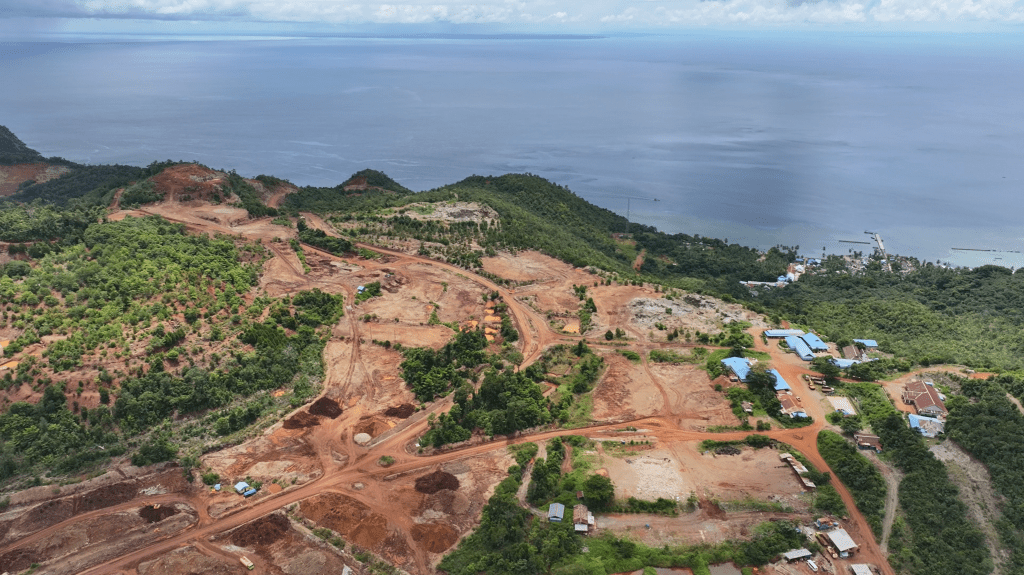
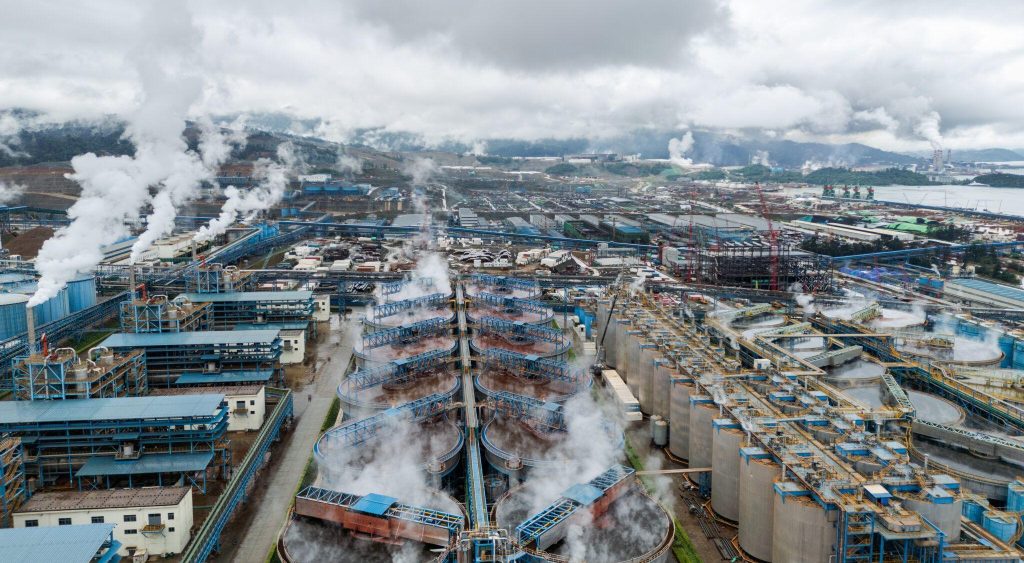
The refining of nickel, primarily through high-pressure acid leaching and other energy-intensive methods, imposes staggering environmental and human costs. Facilities consume massive quantities of coal, water, and sulfuric acid, producing highly toxic waste streams that include sulfur dioxide emissions, acidic wastewater, and tailings laden with arsenic, mercury, and other heavy metals.[25]
These tailings are typically stored in large containment ponds or dams that are prone to leaks, overflows, and catastrophic failures. In some cases, corporations deliberately dispose of tailings into the ocean, leading to widespread soil and water contamination and severe harm to marine ecosystems and coastal fishing communities.[26] For every ton of nickel produced, approximately 1.6 tons of tailings are generated.[27]
Nickel then moves through global supply chains that conceal the damage left behind in vulnerable communities in Indonesia. The disconnect between those who profit and those who pay the price reflects a deeper failure of global economic governance. The result is an asymmetrical model that rewards deregulation and dependency.
The realities of nickel mining in Indonesia are harshly felt by the workers who struggle to make ends meet under low wages and exploitative employment practices.[28] Many face wage manipulation, labor rights violations, and an informal employment model that leaves both local and migrant workers highly vulnerable. These economic pressures are compounded by extreme working conditions, where abuses can occur with little oversight.
Indonesia’s informal sector accounts for 36% of GDP, with an estimated 59% of the country’s 144 million workers engaged in informal activities.[29] Within the nickel supply chain, the informal economy renders workers vulnerable to abuse due to the lack of access to protections.[30] Common practices include short-term contracts, subcontracting schemes, and deceptive job advertisements.[31]
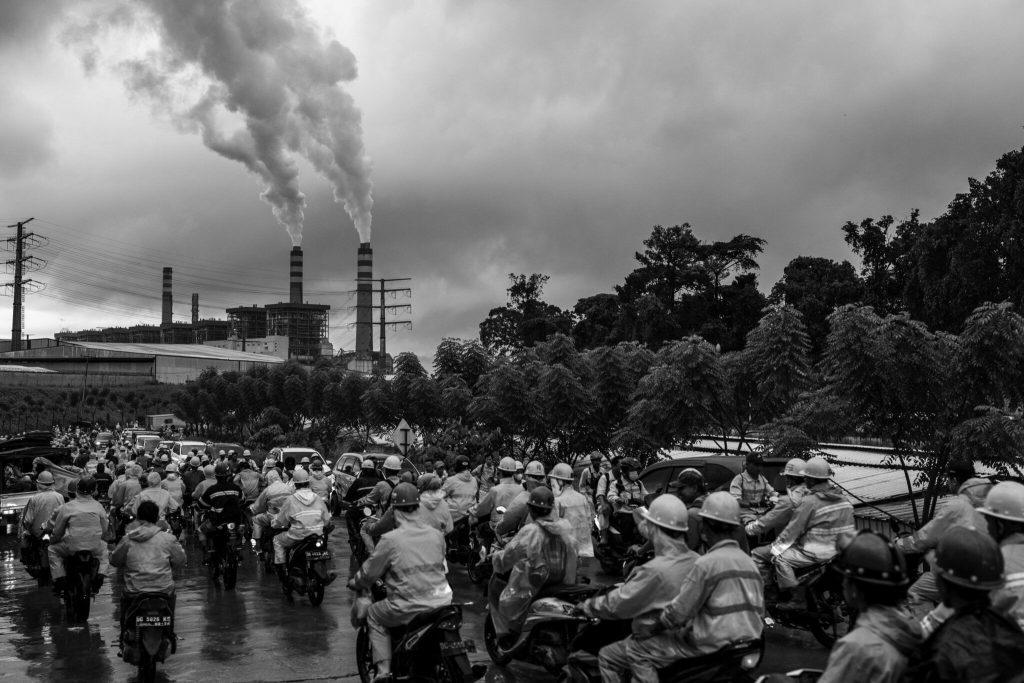
Long hours, extreme heat, and lack of protective equipment lead to respiratory issues and workplace injuries. Over the past decade, many workers have been killed or seriously injured in recurring workplace accidents, including explosions, fires, and heavy vehicle collisions at the nickel processing facilities.[32]
The U.S. State Department’s 2024 report on human rights practices notes that the Indonesian “government enforcement [of labor laws] was inadequate, particularly at smaller companies and in foreign-owned enterprises, such as Chinese-owned smelting sites, where reports of unsafe working conditions and concerns regarding wage payments were prevalent.”[33]
According to a recent supply-chain mapping report, between 2019 and 2025, 104 workplace accidents occurred in nickel smelters across Indonesia, resulting in 107 fatalities and 155 injuries.[34] A single explosion incident in December 2023, at a smelter owned by Tsingshan Holding Group in IMIP, claimed the lives of 21 workers, underscoring the persistent safety failures across the sector.[35]
Migrant workers in Indonesia’s nickel mines frequently have their passports confiscated upon arrival, receive lower-than-promised wages, and are forced to work extended hours.[37] Reports indicate arbitrary wage deductions, as well as physical and verbal abuse.[38]
Nickel production facilities reportedly engage in other practices consistent with forced labor in industrial parks, including restrictions on movement, isolation, constant surveillance, and mandatory overtime.[39] The U.S. State Department’s 2025 Trafficking in Persons Report states that the Indonesian government, “did not proactively screen for trafficking among workers or effectively oversee or enforce labor regulations in high-risk industries, including … extractive industries,” and that it made “limited efforts to investigate allegations of labor exploitation in Chinese government-affiliated industrial parks,” where an estimated 6,000 Chinese migrants work.[40]
Migrant workers often live in isolated dormitories under strict supervision, with minimal access to independent labor representation or grievance mechanisms.[41] The combination of militarized compounds and restricted access for journalists and researchers has shielded the industry from scrutiny, even as workplace fatalities continue to rise.[42]
In 2024, the U.S. Department of Labor added Indonesian nickel to its annual list of goods produced with forced labor.[43]
Companies in Indonesia’s nickel sector have used intimidation tactics to undermine worker organizing and unionization efforts. These actions prevent workers from advocating for greater job security, for permanent and temporary workers, as well as fair wages, reasonable hours, and basic rights such as rest breaks and sufficient recovery time between shifts.[44] Several nickel companies have been documented suppressing labor union activity and retaliating against workers who attempt to organize.[45]
At PT Gunbuster Nickel Industry (GNI), for example, retaliation began soon after the National Workers Union (Serikat Pakerja Nasional or SPN) was registered in April 2022. The company declined to renew the contracts of key organizers, and by July 2022, at least three union leaders had been dismissed. Following a worker strike on January 14, 2023, two additional union members were fired, while others faced intimidation and police surveillance. In total, at least ten union leaders were terminated. One organizer, Sunday Bulu, was initially summoned as a witness but later charged with incitement — an offense carrying up to six years in prison — and was reportedly forcibly transported by police while attending a labor-rights forum.[46]
Similar patterns of suppression have been reported at IMIP, where protests stemming from unsafe and abusive working conditions led to the firing of several union leaders.[47]
The U.S. State Department’s 2024 Country Reports on Human Rights Practices for Indonesia states that “the government did not effectively enforce provisions of the law protecting freedom of association or preventing antiunion discrimination.”[48]
In late 2024, a fatal explosion occurred inside IMIP, the world’s largest nickel-processing hub. A fire broke out after an equipment blast, trapping a crane operator, Gunawan, in the building. Videos circulated of co-workers shouting, “There’s someone inside,” while others sobbed as smoke filled the factory. Gunawan did not survive, and another worker was injured.
According to interviews reported by independent media, IMIP workers have described an environment in which accidents recur across shifts and facilities. One former IMIP furnace operator recounted that “the wages I received did not match the risks I was taking,” displaying burn scars on his forearm and describing years without adequate protective gear.
Safety personnel inside the complex have echoed these concerns. A medical worker at an IMIP-run clinic noted that injuries ranging from minor to severe “happen almost daily.”
Workers say that even when injuries are severe, companies sometimes discourage reporting. A staff member at Risun Group, inside IMIP, said employees sometimes hide accidents because disclosure leads to “pay cuts or warning letters.” The focus at IMIP is not on preventing harm, “they’re learning by accident,” he said.[36]
The environmental toll of Indonesia’s nickel mining is as far-reaching as its human costs. Once-lush rainforests and coastal ecosystems have been stripped to feed global demand, leaving behind deforestation, toxic runoff, and rising greenhouse gas emissions. The extraction and refining of nickel have devastated biodiversity, contaminated water sources, and displaced Indigenous and coastal communities whose livelihoods depend on healthy ecosystems.
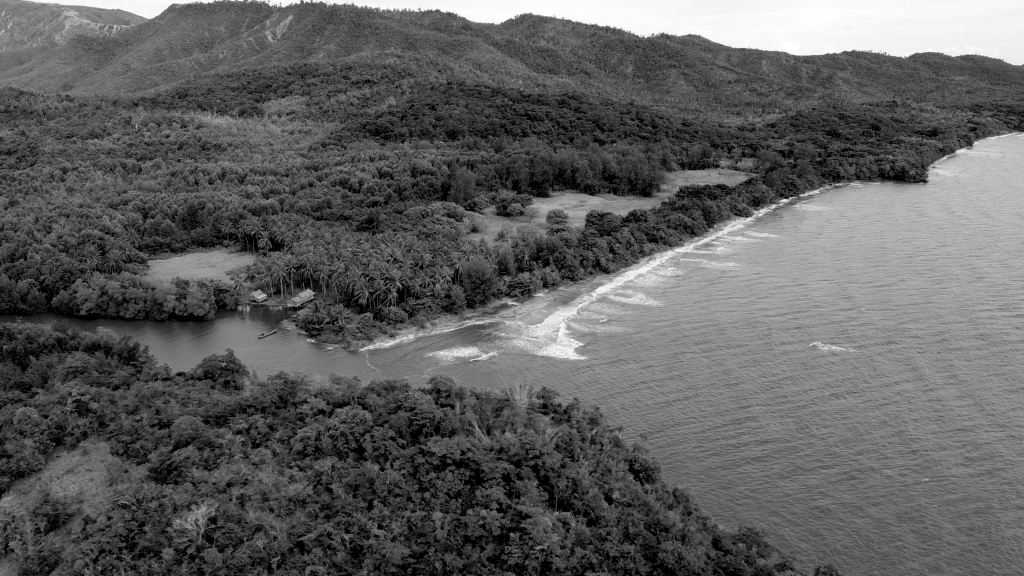
Over 500,000 hectares of rainforest have been destroyed for nickel extraction, threatening biodiversity and Indigenous lands.[49] This large-scale deforestation disrupts ecosystems and weakens natural carbon sinks, potentially accelerating climate change.[50] In addition, nickel smelting releases sulfur dioxide into the atmosphere, contributing to acid rain that damages forests and aquatic life.[51]
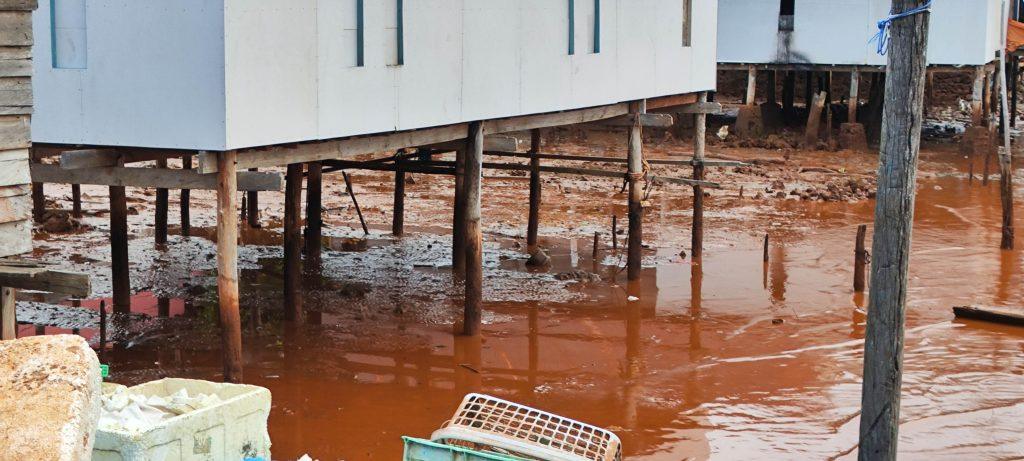
Nickel mining releases heavy metals into waterways, harming fish populations and coastal communities. The coast of Sulawesi and Kabaena Island has experienced particularly dire consequences. Toxic runoff from nickel mines has contaminated the ocean, turning the coast a menacing shade of red.
This waste has also impacted the local fish supply, threatening the livelihoods of fishermen and forcing them to travel farther and farther off the coast to find fish.[52]
It is ironic that while nickel is essential for technologies aimed at reducing carbon emissions, Indonesia’s nickel production is highly carbon-intensive and contributes to massive greenhouse gas emissions. Most Indonesian nickel smelters use pyrometallurgical (high-temperature smelting) processes powered by “captive” coal plants. These private power stations are specifically built to run smelters, not supply the national grid, and are located near mine sites — a setup the U.S. International Trade Commission considers highly energy-intensive.[53]
Recent analysis finds that four major nickel producers in Indonesia emitted an estimated 15 million metric tons of CO₂-equivalent (CO₂e) in 2023, with three coal-reliant operators reporting 57 to 70 metric tons of CO₂ for every ton of nickel, among the highest emission intensities in the world.[54] This dependence on coal-fired power has made Indonesia’s nickel sector one of the most carbon-intensive globally.
Captive coal plant facilities generate 11.6 gigawatts (GW) of power, with another 5.5 GW under construction and 1.5 GW awaiting approval.[55] For reference, one GW is approximately enough electricity to power three-quarters of a million American homes or several million households in Indonesia. These plants now account for 76 percent of all coal power built for private industrial use in Indonesia.[56] If every project proceeds, their combined power generation capacity would rival the total coal capacity of Thailand and the Philippines.[57] At IMIP alone, captive coal generation is expected to reach 5 GW, about the same as Mexico’s entire coal fleet.[58]
“Before the mining started, catching fish was easy. I could just step out of my house and cast my line right in front. But now, the water beneath our homes is filled with red mud, and the fish have gone far away. We have to travel much farther, using up to 20 liters of fuel for a single trip. The catch is smaller every time — sometimes the money from selling fish isn’t even enough to buy fuel. Many of my friends have given up fishing and looked for other work, but here, there aren’t many options.”
— Lahari, Bajau Fisherman from Baliara Village, Kabaena Island
Without decisive intervention, sectoral emissions are projected to climb to 38.5 million metric tons by 2028.[59] With targeted decarbonization measures — such as integrating renewable power sources and improving process efficiency — both the emissions intensity and the sector’s total production-related emissions could be significantly reduced, allowing Indonesia to align its critical mineral strategy with the clean energy transition that its nickel powers.
The health and water crises unfolding around Indonesia’s nickel operations reveal the profound human toll of unchecked industrial expansion. Communities that once relied on rivers, wells, and rainfall for sustenance now face polluted waterways and rising health risks linked to toxic exposure. Nickel mining and smelting have contaminated drinking water, degraded soil, and released hazardous airborne particles that infiltrate homes, bodies, and ecosystems alike. For many residents, access to clean water — a fundamental human right — has become a daily struggle, while workers laboring inside refineries bear the brunt of chronic illness, respiratory disease, and reproductive harm.
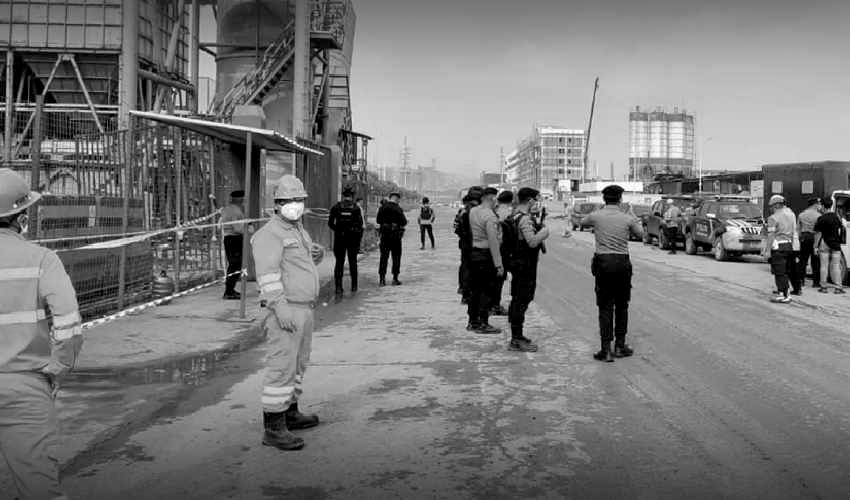
Nickel mining and smelting operations have contaminated local water supplies, posing a threat to residents’ right to safe and clean drinking water.[60] Dangerous levels of pollutants have already been detected, as industrial waste and deforestation continue to degrade surrounding waterways.[61]
On Sulawesi, the freshwater has become undrinkable, forcing locals to resort to water shipped from elsewhere, placing an extra financial burden on families, at around IDR 5,000 per gallon.[62] For workers earning the regional minimum wage — roughly IDR 130,000 or USD 9 per day — the cost of purchasing clean water has become a growing financial strain.[63] For many families, the weekly cost of safe drinking water now equals an entire day’s wages, a heavy burden in regions where households already struggle to afford food, fuel, and other essentials.
Paying for clean drinking water does not solve residents’ problems, as water-soluble forms of nickel can enter the bloodstream when inhaled as airborne dust particles or absorbed through the skin after contact with nickel-containing materials.[64] While the human body can metabolize small amounts of nickel, higher doses may pose significant health risks including allergic skin reactions, gastrointestinal distress, cardiovascular complications, or even cancer following prolonged exposure.[65]
Additionally, soluble nickel compounds have been clearly linked to reproductive toxicity, affecting both developmental outcomes and male reproductive health.[66] Studies of pregnant women employed at nickel hydrometallurgy refining plants have reported higher rates of congenital defects as well as spontaneous or threatened miscarriages.[67]
Exposure to nickel has been linked to increased rates of cancer, respiratory illness, and allergic contact dermatitis, with workers in smelters and refineries especially at risk for nickel-related illnesses.[68] Communities near and downstream from mining may be at increased risk of asthma, nasal congestion, and skin tumors.[69]
Exposure to heavy metals, particularly nickel, has been linked to a higher incidence of congenital defects. Studies found that approximately 17% of live-born infants with nickel-exposed mothers exhibited structural malformations.[70] The data indicated significantly increased relative risks of 2.9 times for total birth defects, 6.1 times for cardiovascular defects, and 1.9 times for musculoskeletal system defects compared to infants whose mothers were not exposed.[71]
“Fifteen years ago, it was easy to draw water from our wells — it was clear, fresh, and always available, even during the dry season. We get our water through pipes from Kabaena Island, and I’ve heard there’s mining activity operating there. Ever since then, even a little rain turns the water cloudy and reddish. Many people here are afraid to drink it because some get stomach aches, even after boiling it. We have had to start buying bottled water, and some families now keep large containers just to collect rainwater. Life has become more expensive, simply to have safe water — something we once took for granted.”
— Ade, a Buton tribes’ woman from Talaga Kecil Island
“Working in the mine isn’t always as good as people think. But I had no other choice — it was the only job that seemed to offer a better future. For five years, I worked as a sampler, taking material samples before the ore was shipped. Then one day, they laid me off without any severance pay because I was only on a short-term contract that was renewed from time to time. I don’t know if it was because I started having shortness of breath and my hearing got worse — before that, I was completely fine. None of us have ever received any medical support or health insurance. To get treatment, I have to travel all the way to Bau-Bau, more than 52 kilometers across the sea — and the boat doesn’t even run every day.”
— Former nickel mine worker in Kabaena Island who requested to remain anonymous
Before nickel leaves the ground, its extraction often begins with the erasure of communities. Across Indonesia’s mining regions, the rapid expansion of nickel operations has displaced Indigenous and rural populations, stripped them of livelihoods, and severed their connection to ancestral lands. For many, nickel mining has meant the loss of home, heritage, and autonomy, a pattern of dispossession that mirrors the colonial extractive systems Indonesia once sought to overcome.
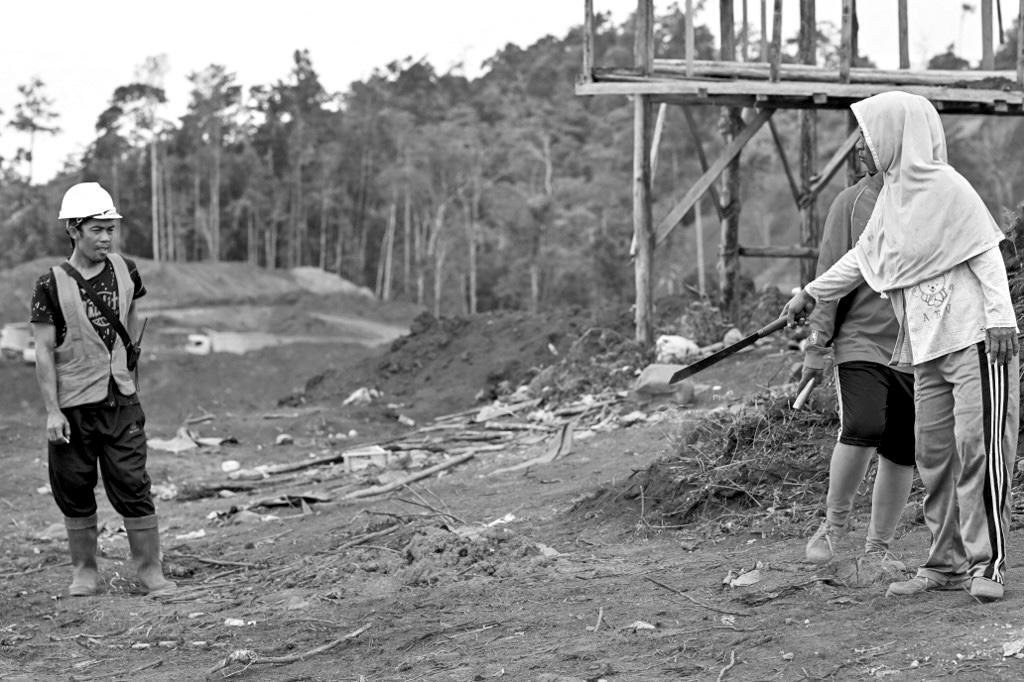
Across Indonesia’s nickel-producing regions, mining expansion has been linked to widespread land rights violations and forced evictions. Entire villages have been cleared to make way for open-pit mines, access roads, and smelter infrastructure, often without meaningful consultation or consent from affected communities.
For Indigenous groups such as the Sawai of Halmahera and the Moronene of Sulawesi, this dispossession is not only economic but cultural, as ancestral lands hold spiritual meaning and sustain collective identity.[72] Their reported displacement contravenes internationally recognized rights to own, use, and control traditional territories, and free, prior, and informed consent (FPIC) under international human rights standards.
Residents who refuse to sell their land or who organize protests have reportedly faced intimidation, harassment, and criminalization.[73] Local NGOs have documented cases of homes being demolished, farmland bulldozed, and access roads blocked by police and private security forces. In several reported incidents, confrontations between communities and authorities have resulted in injury or even death for people defending their land.[74]
In North Maluku’s Weda Bay Industrial Park (IWIP), jointly operated by French, Chinese, and Indonesian firms, Indigenous Sawai communities have reportedly been displaced from customary lands, losing access to their forests and fishing grounds with little or no compensation.[75] At the Weda Bay Industrial Park in North Maluku, communities reported being pressured to relinquish their land to subsidiaries of Eramet and Tsingshan, with compensation far below market value and without meaningful consultation.[76] In Kabaena Island, many farmers had their land seized by mining companies without consultation or adequate compensation.[77]
The compensation offered by corporations — when provided at all — is typically insufficient to replace lost homes, farmland, and livelihoods. Many families receive small lump-sum payments that quickly dissipate, leaving them without income security or a place to live. For farming and coastal communities, displacement leads to immediate impoverishment, food insecurity, and the collapse of a self-sustaining way of life built around community.
“Cashew trees used to fill my land — their harvest paid for my children’s school and our daily needs. After the mines came, the soil changed. The trees stopped bearing fruit; their flowers blackened and fell before ripening. I tried planting again, but nothing grows anymore. When the company came to expand, I refused to sell my land, but they pressured me until I gave in. They paid only IDR 3,500 (USD 0.23 cents) per square meter and didn’t count the trees, only the soil. This was more than land and trees; it was where my family’s stories began. And now, it’s gone.”
— Kadire, Farmer from Kokoe Village, Kabaena Island
The nickel boom has enriched a narrow set of foreign investors and downstream buyers rather than the Indonesian state or its citizens, and resource-rich communities bear the brunt of deforestation, pollution, and displacement. Chinese-backed conglomerates now control roughly three-quarters of production, operating vast smelting complexes under preferential tax and energy arrangements.[78] Western automakers and battery producers reap the rewards downstream through secure access to low-cost, coal-powered refined nickel.[79] Meanwhile, Indonesia had historically captured only a fraction of the value created. Corporations pay very low fees to the government for extracting its minerals while contributing limited technology transfer or long-term industrial development.[80]
Indonesia’s 2020 export ban on raw nickel ore marked a deliberate attempt to reverse that pattern.[81] The policy aimed to move the country up the value chain by requiring domestic processing, stimulating local investment, and raising fiscal revenues.[82] More than a trade measure, it was an effort to reclaim sovereignty over mineral governance and to deploy the same industrial policy tools once used by now wealthy countries to develop their own industries.
The logic behind the export ban was simple. Value addition occurs during processing and manufacturing, not extraction. By retaining those stages within its borders, Indonesia sought to create skilled jobs, attract technology transfer, and keep a greater share of profits circulating in the domestic economy. Yet this strategy challenged a global economic order that privileges unrestricted access to low-cost raw materials. The export ban threatened to shift value creation from processing hubs abroad to production within Indonesia, forcing multinational corporations to build, hire, and invest locally. For trading partners accustomed to extracting value offshore, that rebalancing was intolerable.
The backlash was swift. The European Union filed a complaint at the World Trade Organization (WTO), arguing that Indonesia’s export ban violated global trade rules.[83] Multinational investors based in the Global North used their privileged access to trade negotiators to convince their governments that the policy would distort global supply chains.[84] Yet what these objections truly revealed was how entrenched the neocolonialist asymmetries remain. The same measures that once built wealth in Europe and the United States are portrayed as illegitimate when Global South nations attempt to do the same.
In that sense, Indonesia’s export ban serves as a litmus test for whether Global South nations can truly govern their own resources in the era of critical minerals. The question of who benefits from nickel is, at its core, a question of power. Whether the rules of the global economy will continue to extract value from Global South countries or finally allow it to remain where it is sourced. The next phase of this struggle is now unfolding through a series of bilateral negotiations with the United States. The Trump administration has framed such deals as promoting “resilience” and “security,” but in practice, the deals will likely reinstate the very asymmetries Indonesia sought to overcome.[85]

The race for critical minerals has led to an increasing number of bilateral deals between Global North countries and resource-rich countries in the Global South. Under the Biden administration, discussions surrounding critical minerals focused primarily on advancing climate goals, green energy technologies, and the global transition to renewable energy.[86] Some unintended consequences in the design and implementation of the Inflation Reduction Act (IRA) climate legislation, including its electric vehicle tax credits, spurred the creation of a new legal instrument known as a Critical Minerals Agreement (CMA).[87] Although the Biden administration framed the pursuit of CMAs as tools to advance the fight against climate change, unions, human rights advocates, and environmental justice organizations cautioned that signing CMAs without robust safeguards could incentivize more dangerous and environmentally harmful mining in resource-rich countries.[88]
Now, the climate-hostile Trump administration has moved to eliminate the renewable energy tax credits under the IRA, yet the push to secure critical minerals has only intensified. Instead of grounding this agenda in the clean energy transition, the administration has framed critical minerals as essential to national security and military dominance, particularly to expand U.S.mining investments worldwide and counter China’s Belt and Road Initiative. To advance this strategy, the administration has pushed “minerals-for-security” deals in Ukraine and the Democratic Republic of Congo, and has used harsh tariffs to pressure governments into negotiating agreements that provide the United States preferential access to their minerals.[89]
Indonesia’s restriction on raw nickel exports was a prime target. During his April 2, 2025 “Liberation Day” announcement, President Trump threatened a whopping 32% tariff on Indonesian exports under his “reciprocal tariff” regime.[90] He then announced a 90-day pause on those reciprocal tariffs, as part of his broader coercive strategy designed to strong-arm governments into concessions.[91] The Indonesian government joined dozens of panicked nations in negotiating deals with the Trump administration to avoid the worst of his punishing tariffs.[92]
In July 2025, the Trump administration announced a “Framework for U.S.-Indonesia Agreement on Reciprocal Trade.”[93] The only public information was a joint statement issued by both governments outlining a shortlist of commitments to be negotiated into a formal deal later. The statement indicated that Indonesia had agreed to eliminate national regulations and other “non-tariff barriers” affecting more than 99% of U.S. exports to Indonesia in exchange for reducing the threatened tariff on Indonesian goods from 32% to 19%.[94] Among Indonesia’s concessions was a commitment to “remove restrictions on exports to the United States of industrial commodities, including critical minerals.”[95]
Against this backdrop, the Indonesian government has since indicated that it disagrees with some elements of the “framework” announced by the Trump administration.[96] To date, no negotiating text of any formal agreement has been released, and neither the U.S. Congress nor the Indonesian or American people have had an opportunity to participate in any public consultation process.[97]
Under the Constitution, trade agreements that alter tariffs or create binding obligations fall under congressional authority.[98] Trump, however, is negotiating these deals in secret without seeking congressional input or approval as part of his broader overreach of executive authority.[99]As noted, there was widespread bipartisan concern about the lack of transparency and congressional consultation during the Biden administration’s negotiation of the U.S.-Japan Critical Minerals Agreement. Under Trump, the U.S.-Indonesia framework was negotiated under even greater secrecy and could have negative implications if, as early indications suggest, it will require Indonesia to dismantle export restrictions that have been the core governance tools for managing its nickel sector.
While the framework deal references labor and environmental standards, there is no indication that these provisions will be binding or enforceable. Without enforceability, they are unlikely to incentivize improvements in labor, environmental, or human rights conditions in the highly dangerous and pollution-intensive mining sector.[100]
The U.S.-Indonesia trade framework is only one example. Across the world, Trump continues to wield his sweeping “reciprocal” tariffs to pressure countries into conceding to U.S. demands to avoid the worst of his punitive tariffs.[101] If finalized, the U.S.-Indonesia deal would set a dangerous precedent for other resource-rich countries that attempt to exercise economic self-determination. Rather than supporting sovereign, sustainable development models, the United States is actively undermining them.
The newly released U.S.-Malaysia illustrates this direction clearly. Announced on October 26, 2025, the deal requires Malaysia to undertake extensive changes to its domestic laws and regulations — many of which align with the interests of U.S. corporate actors, especially Big Tech — while imposing virtually no reciprocal obligations on the United States. It further prohibits Malaysia from restricting exports of its own minerals, such as Indonesia has done for its raw nickel to advance domestic industrialization. Labor and environmental standards appear in name only, without any meaningful mechanisms for monitoring or enforcement.[102]
At a time when transparent, enforceable, and just trade frameworks are more necessary than ever, the United States is moving in the opposite direction, toward opaque agreements that constrain the policy space of resource-rich nations in the Global South.
As the United States and its partners seek to secure access to critical minerals through bilateral deals, it is imperative that these efforts do not replicate the extractivist models of exploitation and dispossession that have plagued the Global South since the era of colonialism and continued through trade and investment treaties.[103] Future deals for critical minerals must prioritize long-term environmental health and community well-being over short-term profit and instead help strike a balance between the growing demand for critical minerals and the rights of the communities that supply them.
The following recommendations, informed by the expertise of the Indonesian environmental protection organization Satya Bumi and aligned with the demands of international civil society, aim to promote a just, sustainable, and rights-based critical minerals trade framework.
Ensure Transparency, Participation, and Democratic Oversight

Uphold Labor, Human Rights, and Indigenous Peoples’ Protections
Advance a Circular and Sustainable Minerals Economy

Promote Fair Economic Development and Shared Value

Accountability and Enforcement
[1] Rachmi Hertanti, “Between a mineral and a hard place Indonesia’s export ban on raw minerals,” The Transnational Institute (TNI), June 15, 2023. https://www.tni.org/en/article/between-a-mineral-and-a-hard-place
[2] Rahmat S S Soemadipradja, Anandianty Febrina, Alya Meutia, Madeleine Jacobus, “Indonesian mining regulations: notable changes and developments in recent years,” Soemadipradja & Taher, September 29, 2022. https://www.ibanet.org/Indonesian-mining-regulations
[3] UNCTAD, “Using trade policy to drive value addition: Lessons from Indonesia’s ban on nickel exports Background document to the Commodities and Development Report 2017,” UNCTAD, August, 2017. https://unctad.org/system/files/non-official-document/suc2017d8_en.pdf
[4] David Guberman, Samantha Schreiber, Anna Perry, “Export Restrictions on Minerals and Metals: Indonesia’s Export Ban of Nickel,” United States International Trade Commission (USITC), p. 16, February, 2024. https://www.usitc.gov/publications/332/working_papers/ermm_indonesia_export_ban_of_nickel.pdf
[5] Rahmat S S Soemadipradja, Anandianty Febrina, Alya Meutia, Madeleine Jacobus, “Indonesian mining regulations: notable changes and developments in recent years,” Soemadipradja & Taher, September 29, 2022. https://www.ibanet.org/Indonesian-mining-regulations and Arsalan Ahmed, Michael Merwin, “Indonesia’s Nickel Export Ban Impacts on Supply Chains and the Energy Transition,” The National Bureau of Asian Research, November 19, 2022. https://www.nbr.org/publication/indonesias-nickel-export-ban-impacts-on-supply-chains-and-the-energy-transition/
[6] International Energy Agency (IEA), “Prohibition of the Export of Nickel Ore,” International Energy Agency (IEA), March 19, 2024. https://www.iea.org/policies/16084-prohibition-of-the-export-of-nickel-ore
[7] David Guberman, Samantha Schreiber, Anna Perry, “Export Restrictions on Minerals and Metals: Indonesia’s Export Ban of Nickel,” United States International Trade Commission (USITC), p. 12, February, 2024. https://www.usitc.gov/publications/332/working_papers/ermm_indonesia_export_ban_of_nickel.pdf
[8] David Guberman, Samantha Schreiber, Anna Perry, “Export Restrictions on Minerals and Metals: Indonesia’s Export Ban of Nickel,” United States International Trade Commission (USITC), p. 17, February, 2024. https://www.usitc.gov/publications/332/working_papers/ermm_indonesia_export_ban_of_nickel.pdf
[9] David Guberman, Samantha Schreiber, Anna Perry, “Export Restrictions on Minerals and Metals: Indonesia’s Export Ban of Nickel,” United States International Trade Commission (USITC), p. 16, February, 2024. https://www.usitc.gov/publications/332/working_papers/ermm_indonesia_export_ban_of_nickel.pdf
[10] The White House, “Fact Sheet: The United States and Indonesia Reach Historic Trade Deal,” The White House, July 22, 2025. https://www.whitehouse.gov/fact-sheets/2025/07/fact-sheet-the-united-states-and-indonesia-reach-historic-trade-deal/
[11] Rachmi Hertanti, “The US-Indonesia Tariff Deal: A Harmful Trade-Off,” The Transnational Institute (TNI), July 31, 2025. https://www.tni.org/en/article/the-us-indonesia-tariff-deal
[12] The White House, “Fact Sheet: President Donald J. Trump Declares National Emergency to Increase our Competitive Edge, Protect our Sovereignty, and Strengthen our National and Economic Security,” The White House, April 2, 2025. https://www.whitehouse.gov/fact-sheets/2025/04/fact-sheet-president-donald-j-trump-declares-national-emergency-to-increase-our-competitive-edge-protect-our-sovereignty-and-strengthen-our-national-and-economic-security/
[13] Iza Camarillo, “Trump’s Tariffs Are Extremely Dumb, Just Not For The Reasons You Might Think,” Common Dreams, April 4, 2025. https://www.commondreams.org/opinion/trump-s-tariffs-are-extremely-dumb-just-not-for-the-reasons-you-might-think
[14] The White House, “Immediate Measures to Increase American Mineral Production,” The White House, March 20, 2025. https://www.whitehouse.gov/presidential-actions/2025/03/immediate-measures-to-increase-american-mineral-production/
[15] International Trade Administration (ITA), “Indonesia Critical Minerals,” International Trade Administration (ITA), September 27, 2023. https://www.trade.gov/market-intelligence/indonesia-critical-minerals
[16] U.S. Department of the Interior, U.S. Geological Survey, “Mineral Commodity Summaries 2025,” U.S. Department of the Interior, U.S. Geological Survey, p.125, March, 2025. https://pubs.usgs.gov/periodicals/mcs2025/mcs2025.pdf
[17] Iza Camarillo, Sarah Stevens, “Trade and Critical Minerals: The Deadly Cost of Cobalt Mining in the Congo,” Public Citizen, October 2024. https://gtwaction.org/the-deadly-cost-of-cobalt-mining-in-the-congo/
[18] Reuters, “Chinese firms control around 75% of Indonesian nickel capacity, report finds,” Reuters, February 5, 2025. https://www.reuters.com/markets/commodities/chinese-firms-control-around-75-indonesian-nickel-capacity-report-finds-2025-02-05/#:~:text=The%20C4ADS%20report%20found%20that,PT%20Jiu%20Long%20Metal%20Industry and CRI, “Ongoing Harms, Limited Accountability,” June 2025. https://cri.org/reports/ongoing-harms-limited-accountability/
[19] Global Energy Monitor, Global Coal Plant Tracker, 2024, visited on November 21, 2025. https://globalenergymonitor.org/projects/global-coal-plant-tracker/ and International Energy Agency (IEA), Indonesia, visited on November 21, 2025. https://www.iea.org/countries/indonesia/coal#how-is-coal-used-in-indonesia
[20] Global Witness, “Indonesia’s ‘Amazon of the Seas’ threatened by EV nickel rush,” June 12, 2025. https://globalwitness.org/en/campaigns/transition-minerals/indonesias-amazon-of-the-seas-threatened-by-ev-nickel-rush/
[21] The U.S. Energy Information Administration (EIA), “Country Analysis Brief: Indonesia,” The U.S. Energy Information Administration (EIA), p.11, August 25, 2025. https://www.eia.gov/international/content/analysis/countries_long/Indonesia/Indonesia_2025.pdf
[22] Iza Camarillo and Sarah Stevens, “The Scramble for Africa Continues: Impacts of Investor-State Dispute Settlement on African Countries,” Public Citizen, December 20, 2024. https://www.citizen.org/article/the-scramble-for-africa-continues-impacts-of-investor-state-dispute-settlement-on-african-countries/
[23]Catur Widi, “The Chaotic Labor Dispute in Indonesia Morowali Industrial Park (IMIP),” Rasamala Hijau Indonesia, Trend Asia, September 5, 2024. https://trendasia.org/en/the-chaotic-labor-disputes-in-indonesia-morowali-industrial-park-imip/ and Grahat Nagara, Ferdian Yazid, Gita Ayu Atikah, “Corruption Risk Assessment on License and Monitoring of Mining Industry in Indonesia,” Transparency International Indonesia, 2023. https://ti.or.id/wp-content/uploads/2024/09/MACRA-Penilaian-Risiko-Korupsi-Perizinan-Pegawasan-tambang-di-Indonesia_ENG.pdf
[24] Ami A Meutia, Dianto Bachriadi, Nurfitri Abdul Gafur, “Environment Degradation, Health Threats, and Legality at the Artisanal Small-Scale Gold Mining Sites in Indonesia,” International Journal of Environmental Research and Public Health, September 17, 2023. https://pmc.ncbi.nlm.nih.gov/articles/PMC10531021/#:~:text=Moreover%2C%20the%20most%20significant%20problem,try%20and%20fill%20that%20gap.
[25] Earthworks, “Indonesia Earthworks helps stop the nickel industry from endangering communities and ecosystems,” Earthworks. https://earthworks.org/locations/indonesia/#:~:text=The%20Indonesia%20Weda%20Bay%20Industrial,waste%20directly%20into%20the%20ocean.
[26] Alfonsus H Harianja, Grace S Saragih, Ridwan Fauzi, M Yusup Hidayat, Yunesfi Syofyan, Ely Rahmy Tapriziah, Sri Endah Kartiningsih, “Mercury Exposure in Artisanal and Small-Scale Gold Mining Communities in Sukabumi, Indonesia,” Journal of Health & Pollution, December 2, 2020. https://pmc.ncbi.nlm.nih.gov/articles/PMC7731497/#:~:text=Commonly%2C%20ASGM%20in%20Indonesia%20uses,other%20nearby%20inhabitants%20to%20ASGM.&text=Uncontrolled%20Hg%20application%20occurs%20due,after%20coal%20burning%2C%20in%20Indonesia.&text=Elemental%20Hg%20and%20Hg%20compounds,which%20are%20known%20as%20biomarkers.&text=Mercury%20exposure%20over%20a%20long,humans%20who%20live%20around%20ASGM.
[27] Eri Silva, “Indonesia’s nickel processing boom raises questions over tailings disposal,” S&P Global, April 17, 2023. https://www.spglobal.com/marketintelligence/en/news-insights/latest-news-headlines/indonesia-s-nickel-processing-boom-raises-questions-over-tailings-disposal-75180844
[28] Alfian Al-Ayubby, “The workers paying the price for Indonesia’s nickel boom,” New Mandala, June 14, 2024. https://www.newmandala.org/the-workers-paying-the-price-for-indonesias-nickel-boom/
[29] Philip Schellekens and Shahid Yusuf, “Accelerating growth in Indonesia: An industrial policy for the rural informal sector, ” Brookings Institution, March 7, 2025. https://www.brookings.edu/articles/accelerating-growth-in-indonesia-an-industrial-policy-for-the-rural-informal-sector/#:~:text=Informality%20in%20Indonesia,of%20other%20Southeast%20Asian%20countries.
[30] China Labor Watch, “Compounding Vulnerabilities: Chinese Workers in Indonesia,” China Labor Watch, p. 26, December 22, 2023. https://chinalaborwatch.org/indonesia-workers-report/
[31] China Labor Watch, “Compounding Vulnerabilities: Chinese Workers in Indonesia,” China Labor Watch, p. 18, December 22, 2023. https://chinalaborwatch.org/indonesia-workers-report/
[32] Alfian Al-Ayubby, “The workers paying the price for Indonesia’s nickel boom,” New Mandala, June 14, 2024. https://www.newmandala.org/the-workers-paying-the-price-for-indonesias-nickel-boom/
[33] U.S. Department of State, “2024 Country Reports on Human Rights Practices: Indonesia,” U.S. Department of State, 2024. https://www.state.gov/reports/2024-country-reports-on-human-rights-practices/indonesia/
[34] S. Geurts, B. Kuepper and P. Boev, “The Destructive Indonesian Nickel Supply Chain: A supply chain mapping & risk assesment,” Profundo, August 20, 2025, p.44. https://hwkvufmtfxjkrhbrfqkj.supabase.co/storage/v1/object/public/PUB/The%20Destructive%20Indonesian%20Nickel%20Supply%20Chain%2C%20a%20supply%20chain%20mapping%20and%20risk%20assessment%202025.pdf
[35] Joseph Rachman,“Indonesia’s Nickel Business Is Boosting Development and Ruining Lives,” Foreign Policy, January 6, 2025. https://foreignpolicy.com/2025/01/06/indonesia-nickel-industry-china-deaths-worker-safety-imip/
[36] A. Anantha Lakshmi, Diana Mariska, “‘Production first, safety later’: inside the world’s largest nickel site,” Financial Times, November 28, 2024. https://www.ft.com/content/56013ee9-f456-4646-895c-aeb65a685f85
[37] Resty Woro Yuniar, “Indonesia’s nickel sector under scrutiny as Chinese workers allege inhumane working conditions,” South China Morning Post, March 3, 2023. https://www.scmp.com/week-asia/people/article/3212109/indonesias-nickel-sector-under-scrutiny-chinese-workers-allege-inhumane-working-conditions?campaign=3212109&module=perpetual_scroll_0&pgtype=article
[38] China Labor Watch, “Compounding Vulnerabilities: Chinese Workers in Indonesia,” China Labor Watch, p. 24, December 22, 2023. https://chinalaborwatch.org/indonesia-workers-report/
[39] Joseph Rachman, “Indonesia: US Department of Labor Adds Nickel to Forced Labour List, Citing Poor Working Conditions in Chinese-Indonesia Industrial Parks,” Asia Times, September 10, 2024. https://www.business-humanrights.org/en/latest-news/indonesia-us-labor-dept-adds-nickel-to-forced-labor-list-citing-poor-woorking-conditions-in-chinese-indonesian-industrial-parks/
[40] U.S. Department of State, “2025 Trafficking in Persons Report: Indonesia,” U.S. Department of State, 2025. https://www.state.gov/reports/2025-trafficking-in-persons-report/indonesia/ and U.S. Department of Labor, “2024 List of Goods Produced by Child Labor or Forced Labor,” U.S. Department of Labor, p. 88. https://www.dol.gov/sites/dolgov/files/ILAB/child_labor_reports/tda2023/2024-tvpra-list-of-goods.pdf
[41] Reny Sri Ayu Arman, Bm Lukita Grahadyarini, “The Lure of Big Wages in Morowali Ends in Pain,” Kompas, February 7, 2024. https://www.kompas.id/artikel/en-buruh-industri-nikel-berharap-upah-layak-untuk-hidup-layak
[42] Aisyah Llewellyn, “Silencing the media: Indonesia shooting reveals reporting risks,” Aljazeera, July 9, 2021. https://www.aljazeera.com/news/2021/7/9/indonesia-killing-shows-rising-risk-in-reporting-southeast-asia#:~:text=Self%2Dcensorship,democracy%20function%20in%20such%20conditions?%E2%80%9D
[43] Joseph Rachman, “Indonesia: US Department of Labor adds nickel to forced labor list citing poor working conditions in Chinese-Indonesian industrial parks,” Asia Times, September 10, 2024. https://www.business-humanrights.org/en/latest-news/indonesia-us-labor-dept-adds-nickel-to-forced-labor-list-citing-poor-woorking-conditions-in-chinese-indonesian-industrial-parks/
[44] Business & Human Rights Resource Centre, “Powering Electric Vehicles: Human Rights Impact of Indonesia’s Nickel Rush,” Business & Human Rights Resource Centre, July 31, 2024. https://www.business-humanrights.org/en/from-us/briefings/powering-electric-vehicles-human-rights-in-indonesias-nickel-supply-chains/
[45] Business & Human Rights Resource Centre, “Powering Electric Vehicles: Human Rights Impact of Indonesia’s Nickel Rush,” Business & Human Rights Resource Centre, July 31, 2024. https://www.business-humanrights.org/en/from-us/briefings/powering-electric-vehicles-human-rights-in-indonesias-nickel-supply-chains/ and Solidar, “Critical Minerals, Critical Conditions: The Struggle of Nickel Mine Workers in Indonesia,” Solidar, p. 18, July 10, 2024. https://www.solidar.org/publications-page/case-study-critical-minerals-critical-conditions-the-struggle-of-nickel-mine-workers-in-indonesia/
[46] Permata Adinda, “Indonesia: Polices reportedly criminalise union members after PT GNI protest turns deadly,” Project Multatuli, China Labor Watch, May 26, 2023. https://www.business-humanrights.org/en/latest-news/indonesia-polices-reportedly-criminalise-union-members-after-pt-gni-protest-turns-deadly/
[47] Stories from Indonesia, “Fatalities, Accidents, Suppression and Criminalization: The Fate of Workers at the PT GNI Nickel Smelter By Project Multatuli Pt7,” May 1, 2024. https://storiesfromindonesia.com/2024/05/01/fatalities-accidents-suppression-and-criminalization-the-fate-of-workers-at-the-pt-gni-nickel-smelter-by-project-multatuli-pt7/
[48] U.S. Department of State, “Indonesia 2024 Human Rights Report,” U.S. Department of State, 2024. https://www.state.gov/reports/2024-country-reports-on-human-rights-practices/indonesia/
[49] Climate Rights International (CRI), “Nickel Unearthed The Human and Climate Costs of Indonesia’s Nickel Industry,” p. 65, January 16, 2024. https://cri.org/indonesia-huge-nickel-project-driving-climate-rights-environmental-harms/#:~:text=Nickel%20mining%20and%20smelting%20operations,needs%2C%20Climate%20Rights%20International%20said.
[50] Climate Rights International (CRI), “Nickel Unearthed The Human and Climate Costs of Indonesia’s Nickel Industry,” p. 65, January 16, 2024. https://cri.org/indonesia-huge-nickel-project-driving-climate-rights-environmental-harms/#:~:text=Nickel%20mining%20and%20smelting%20operations,needs%2C%20Climate%20Rights%20International%20said.
[51] Climate Rights International (CRI), “Nickel Unearthed The Human and Climate Costs of Indonesia’s Nickel Industry,” p. 57, January 16, 2024. https://cri.org/indonesia-huge-nickel-project-driving-climate-rights-environmental-harms/#:~:text=Nickel%20mining%20and%20smelting%20operations,needs%2C%20Climate%20Rights%20International%20said.
[52] Hanna Brown, “‘The trees were all gone’: Indonesia’s nickel mines reveal the dark side of our electric future,” Euronews, March 15, 2023. https://www.euronews.com/green/2023/03/15/the-trees-were-all-gone-indonesias-nickel-mines-reveal-the-dark-side-of-our-electric-futur
[53] David Guberman, Samantha Schreiber, and Anna Perry, “Export Restrictions on Minerals and Metals: Indonesia’s Export Ban of Nickel,” United States International Trade Commission (USITC), February 2024, p.19. https://www.usitc.gov/publications/332/working_papers/ermm_indonesia_export_ban_of_nickel.pdf
[54] Ghee Peh, “The rapid growth in Indonesian nickel production may lead to surging greenhouse gas emissions,” Institute for Energy Economics and Financial Analysis (IEEFA), October 24, 2024. https://ieefa.org/articles/rapid-growth-indonesian-nickel-production-may-lead-surging-greenhouse-gas-emissions
[55] Climate Rights International (CRI), “‘Does Anyone Care?’ The Human, Environmental, and Climate Toll of Indonesia’s Nickel Industry,” October 2025. https://cri.org/reports/does-anyone-care/
[56] Climate Rights International (CRI), “‘Does Anyone Care?’ The Human, Environmental, and Climate Toll of Indonesia’s Nickel Industry,” October, 2025. https://cri.org/reports/does-anyone-care/
[57] Climate Rights International (CRI), “‘Does Anyone Care?’ The Human, Environmental, and Climate Toll of Indonesia’s Nickel Industry,” October 2025. https://cri.org/reports/does-anyone-care/
[58] Andrew Digges, “International support crucial to decarbonization of the Indonesian nickel supply chain,” Norton Rose Fulbright, February 2023. https://www.nortonrosefulbright.com/en/knowledge/publications/19ccd372/international-support-crucial-to-decarbonization-of-the-indonesian-nickel-supply-chain
[59] Climate Rights International (CRI), “‘Does Anyone Care?’ The Human, Environmental, and Climate Toll of Indonesia’s Nickel Industry,” October 2025. https://cri.org/reports/does-anyone-care/
[60] Business & Human Rights Resource Centre, “Powering Electric Vehicles: Human Rights Impact of Indonesia’s Nickel Rush,” Business & Human Rights Resource Centre, July 31, 2024. https://www.business-humanrights.org/en/from-us/briefings/powering-electric-vehicles-human-rights-in-indonesias-nickel-supply-chains/
[61] Ej Atlas, “Nickel rush threatens the health and environment of Obi Island’s people, Indonesia,” June 14, 2023. https://ejatlas.org/conflict/local-health-threatened-by-nickel-mining-in-obi-island-indonesia
[62] China Labor Watch, “Compounding Vulnerabilities: Chinese Workers in Indonesia,” China Labor Watch, p. 25, December 22, 2023. https://chinalaborwatch.org/indonesia-workers-report/
[63] Linda Yulisman, “Nickel workers powered the EV battery boom. Now, layoffs have hit,” Rest of World, July 23, 2025. https://restofworld.org/2025/nickel-ev-batteries-indonesia-layoffs/#:~:text=While%20nickel%20jobs%20have%20made,are%20unusually%20frequent%20at%20IMIP.
[64] Dartmouth Toxic Metals, “The Facts on Nickel,” Dartmouth Toxic Metals. https://sites.dartmouth.edu/toxmetal/more-metals/nickel-hidden-in-plain-sight/the-facts-on-nickel/
[65] Dartmouth Toxic Metals, “The Facts on Nickel,” Dartmouth Toxic Metals. https://sites.dartmouth.edu/toxmetal/more-metals/nickel-hidden-in-plain-sight/the-facts-on-nickel/
[66] State of California Office of Environmental Health Hazard Assessment (OEHHA), “Proposition 65 Definition of Nickel (Soluble Compounds),” OEHHA, May 2, 2019. https://oehha.ca.gov/proposition-65/crnr/proposition-65-definition-nickel-soluble-compounds
[67] State of California Office of Environmental Health Hazard Assessment (OEHHA), “Proposition 65 Definition of Nickel (Soluble Compounds),” OEHHA, May 2, 2019. https://oehha.ca.gov/proposition-65/crnr/proposition-65-definition-nickel-soluble-compounds
[68] Climate Rights International (CRI), “Nickel Unearthed The Human and Climate Costs of Indonesia’s Nickel Industry,” Climate Rights International, January 2024. https://cri.org/reports/nickel-unearthed/
[69] Climate Rights International (CRI), “Nickel Unearthed The Human and Climate Costs of Indonesia’s Nickel Industry,” Climate Rights International, January 2024. https://cri.org/reports/nickel-unearthed/
[70] V P Chashschin 1, G P Artunina, T Norseth, “Congenital defects, abortion and other health effects in nickel refinery workers,” Science of the Total Environment, June 6, 1994. https://pubmed.ncbi.nlm.nih.gov/8029704/#:~:text=Structural%20malformations%20were%20found%20in,system%2C%20respectively%2C%20were%20demonstrated.
[71] V P Chashschin 1, G P Artunina, T Norseth, “Congenital defects, abortion and other health effects in nickel refinery workers,” Science of the Total Environment, June 6, 1994. https://pubmed.ncbi.nlm.nih.gov/8029704/#:~:text=Structural%20malformations%20were%20found%20in,system%2C%20respectively%2C%20were%20demonstrated.
[72] Climate Rights International (CRI), “Nickel Unearthed The Human and Climate Costs of Indonesia’s Nickel Industry,” p. 35, January, 2024. https://cri.org/reports/nickel-unearthed/
[73] Climate Rights International (CRI), “Nickel Unearthed The Human and Climate Costs of Indonesia’s Nickel Industry,” p. 27-28, January, 2024. https://cri.org/reports/nickel-unearthed/
[74] S. Shree Raaman, “Nickel Mining Puts Indonesian Fishers On Edge,” Earth Island Journal, p. 3, May 9, 2023. https://www.earthisland.org/journal/index.php/articles/entry/nickel-mining-puts-indonesian-fishers-on-edge/##
[75] Climate Rights International (CRI), “Nickel Unearthed The Human and Climate Costs of Indonesia’s Nickel Industry,” January 2024. https://cri.org/reports/nickel-unearthed/
[76] Shelley Marshall, Kate Taylor, Samantha Balaton-Chrimes, “Case Study of the CAO’s Approach to the PT Weda Nickel Mine Complaint: Barriers to Mediation in a Climate of Fear,” Corporate Accountability Research, 2016. https://corporateaccountabilityresearch.net/njm-report-x-weda-bay
[77] Dhany Alfalah, Riezcy Cecilia Dewi, Salma Inaz Firdaus “Kabaena Part II: Tracing the Entry Point of Destructions from the Network of Politically Exposed Persons,” Satya Bumi, June 19, 2025, p.8. https://satyabumi.org/wp-content/uploads/2025/08/REPORT-Kabaena-Part-II-english.pdf
[78] Reuters, “Chinese firms control around 75% of Indonesian nickel capacity, report finds,” February 5, 2025. https://www.reuters.com/markets/commodities/chinese-firms-control-around-75-indonesian-nickel-capacity-report-finds-2025-02-05/
[79] Rodrigo Castillo, Lilly Blumenthal, Caitlin Purdy, “Indonesia’s electric vehicle batteries dream has a dirty nickel problem,” Brookings, September 21, 2022. https://www.brookings.edu/articles/indonesias-electric-vehicle-batteries-dream-has-a-dirty-nickel-problem/
[80] Indonesia Economic Prospects (IEP), “Unleashing Indonesia’s Business Potential,” World Bank, June 2024. https://www.worldbank.org/en/country/indonesia/publication/indonesia-economic-prospect#2
[81] Rachmi Hertanti, “Between a mineral and a hard place Indonesia’s export ban on raw minerals,” The Transnational Institute (TNI), June 15, 2023. https://www.tni.org/en/article/between-a-mineral-and-a-hard-place
[82] International Energy Agency (IEA), “Prohibition of the export of nickel ore,” March 19, 2024. https://www.iea.org/policies/16084-prohibition-of-the-export-of-nickel-ore
[83] WTO, “Indonesia – Measures Relating to Raw Materials (DS592),” WTO, November 30, 2022. https://www.wto.org/english/tratop_e/dispu_e/cases_e/ds592_e.htm
[84] The European Steel Association (EUROFER), “EUROFER welcomes WTO ruling confirming Indonesia’s illegal export ban of nickel ore,” December 2, 2022. https://www.eurofer.eu/press-releases/eurofer-welcomes-wto-ruling-confirming-indonesias-illegal-export-ban-of-nickel-ore
[85] The White House, “Fact Sheet: President Donald J. Trump Ensures National Security and Economic Resilience Through Section 232 Actions on Processed Critical Minerals and Derivative Products,” April 15, 2025. https://www.whitehouse.gov/fact-sheets/2025/04/fact-sheet-president-donald-j-trump-ensures-national-security-and-economic-resilience-through-section-232-actions-on-processed-critical-minerals-and-derivative-products/
[86] Iza Camarillo, “Trade and Critical Minerals: The Deadly Cost of Cobalt Mining in the Congo,” Public Citizen, October 2024. https://gtwaction.org/the-deadly-cost-of-cobalt-mining-in-the-congo/
[87] Iza Camarillo, “Trade and Critical Minerals: The Deadly Cost of Cobalt Mining in the Congo,” Public Citizen, October 2024. https://gtwaction.org/the-deadly-cost-of-cobalt-mining-in-the-congo/
[88] Trade Justice Education Fund, “Environmental Orgs & Others Outline Critical Mineral Supply Chain Standards Needed to Advance Climate and Sustainable Development Goals,” April 22, 2024. https://tradejusticeedfund.org/criticalmineralsupplychainsrelease/
[89] Iza Camarillo, “Trade and Critical Minerals: The Deadly Cost of Cobalt Mining in the Congo,” Public Citizen, October 2024. https://gtwaction.org/the-deadly-cost-of-cobalt-mining-in-the-congo/
[90] The White House, “Regulating Imports with a Reciprocal Tariff to Rectify Trade Practices that Contribute to Large and Persistent Annual United States Goods Trade Deficits,” April 2, 2025. https://www.whitehouse.gov/presidential-actions/2025/04/regulating-imports-with-a-reciprocal-tariff-to-rectify-trade-practices-that-contribute-to-large-and-persistent-annual-united-states-goods-trade-deficits/
[91] The White House, “Regulating Imports with a Reciprocal Tariff to Rectify Trade Practices that Contribute to Large and Persistent Annual United States Goods Trade Deficits,” April 2, 2025. https://www.whitehouse.gov/presidential-actions/2025/04/regulating-imports-with-a-reciprocal-tariff-to-rectify-trade-practices-that-contribute-to-large-and-persistent-annual-united-states-goods-trade-deficits/
[92] Public Citizen, “90 Deals in 90 Days? Inside Trump’s Corrupt Trade Deals,” visited on November 21, 2024. https://www.citizen.org/article/90-deals-in-90-days/
[93] The White House, “Joint Statement on Framework for United States-Indonesia Agreement on Reciprocal Trade,” July 22, 2025. https://www.whitehouse.gov/briefings-statements/2025/07/joint-statement-on-framework-for-united-states-indonesia-agreement-on-reciprocal-trade/
[94] Rachmi Hertanti, “The US-Indonesia Tariff Deal A Harmful Trade-Off,” The Transnational Institute (TNI), July 31, 2025. https://www.tni.org/en/article/the-us-indonesia-tariff-deal
[95] The White House, “The United States and Indonesia Reach Historic Trade Deal,” July 22, 2025. https://www.whitehouse.gov/fact-sheets/2025/07/fact-sheet-the-united-states-and-indonesia-reach-historic-trade-deal/
[96] Doug Palmer, “US steel producers confused by mixed signals on Indonesia’s nickel export ban,” PoliticoPro, July 28, 2025. https://subscriber.politicopro.com/article/2025/07/u-s-steel-producers-confused-by-mixed-signals-on-indonesias-nickel-export-ban-00480050
[97] Rachmi Hertanti, “The US-Indonesia Tariff Deal A Harmful Trade-Off,” The Transnational Institute (TNI), July 31, 2025. https://www.tni.org/en/article/the-us-indonesia-tariff-deal
[98] Article I, Section 8 of the U.S. Constitution. https://constitution.congress.gov/browse/article-1/section-8/
[99] Public Citizen, “Trump’s Secret Trade Deals with Malaysia and Cambodia Revealed: Imperialist Bullying on Behalf of Big Tech, Other Corporate Interests,” Public Citizen, October 29, 2025. https://www.citizen.org/news/trumps-secret-trade-deals-with-malaysia-and-cambodia-revealed-imperialist-bullying-on-behalf-of-big-tech-other-corporate-interests/
[100] The White House, “Joint Statement on Framework for United States-Indonesia Agreement on Reciprocal Trade,” July 22, 2025. https://www.whitehouse.gov/briefings-statements/2025/07/joint-statement-on-framework-for-united-states-indonesia-agreement-on-reciprocal-trade/
[101] Miranda Jeyaretnam, “Trump Administration Lowers Expectations for Trade Deals as Tariff Deadline Approaches,” Time, July 1, 2025. https://time.com/7299006/trump-trade-deals-negotiations-expectations-tariffs-deadline-china-japan-canada/
[102] Public Citizen, “Trump’s Secret Trade Deals with Malaysia and Cambodia Revealed: Imperialist Bullying on Behalf of Big Tech, Other Corporate Interests,” October 29, 2025. https://www.citizen.org/news/trumps-secret-trade-deals-with-malaysia-and-cambodia-revealed-imperialist-bullying-on-behalf-of-big-tech-other-corporate-interests/
[103] Iza Camarillo, “The Corporate Colonization of Latin America: How Investor-State Dispute Settlement (ISDS) Harms Indigenous Peoples,” Public Citizen, June 2024. https://gtwaction.org/isds-impacts-on-indigenous-peoples/